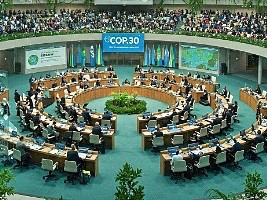
The 30th Conference of the Parties (COP30), held in Belém, Brazil, concluded on November 21, 2025, with a ‘minimal’ agreement that fell short of the ambitious goals set for climate and biodiversity protection. Despite prolonged negotiations extending into the night of November 22, the final consensus was widely regarded as underwhelming, if not a complete failure. The agreement, while bolstering climate finance, only indirectly addressed fossil fuels—oil, gas, and coal—the primary drivers of climate change. Tensions between industrialized and emerging nations, particularly oil and gas exporters, thwarted any binding commitments to phase out fossil fuels. Key elements of the agreement include a pledge to mobilize $1.3 trillion annually by 2035, with a tripling of adaptation funding for developing countries like Haiti. However, the non-binding nature of the measures raises concerns about their tangible impact. International reactions were mixed: the European Union expressed disappointment over the lack of a fossil fuel phase-out plan, while emerging and exporting countries celebrated the avoidance of binding obligations. Civil society organizations and Amazonian Indigenous groups criticized the agreement as ‘insufficient’ in addressing the escalating climate crisis.